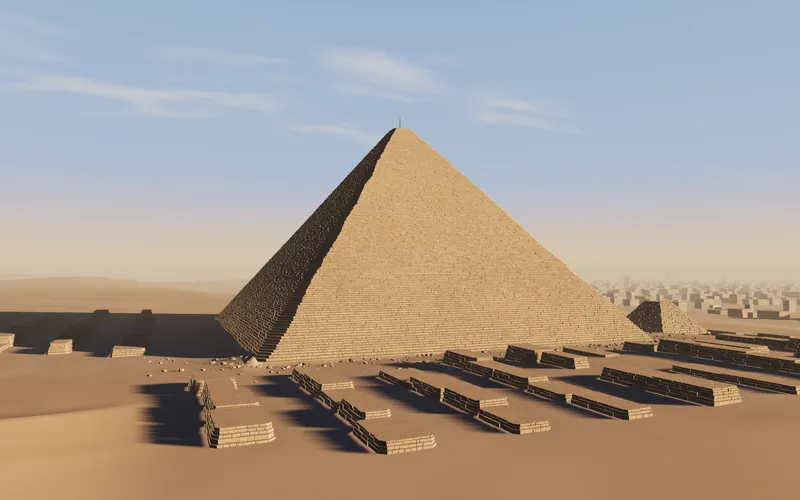
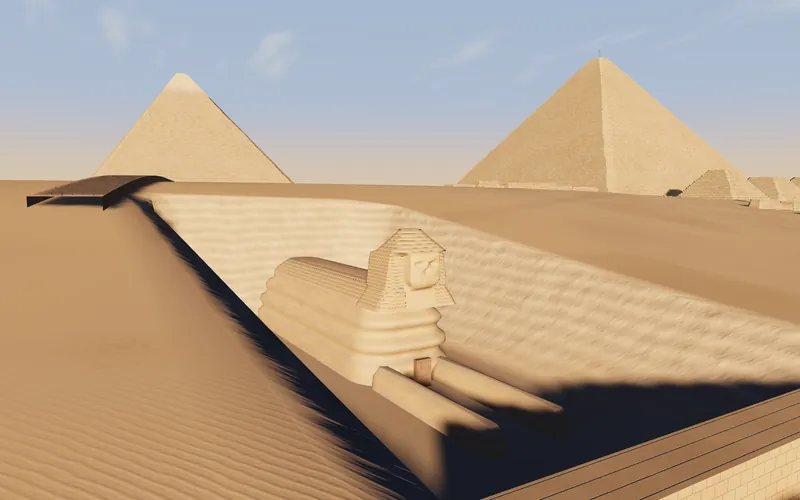
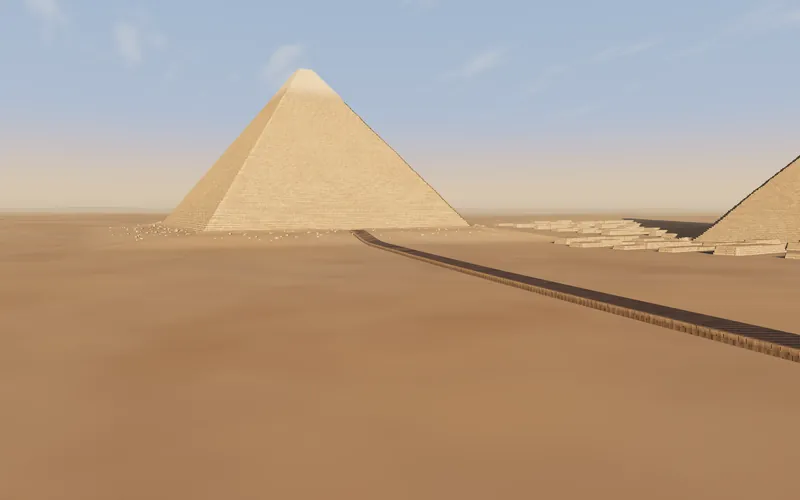
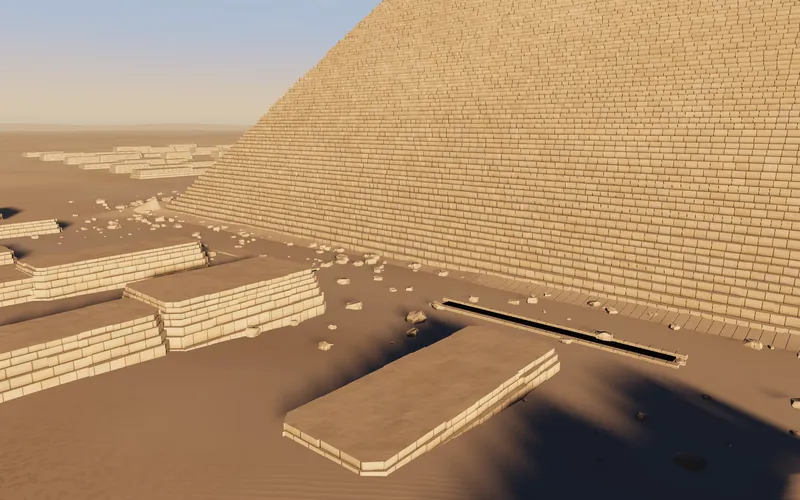
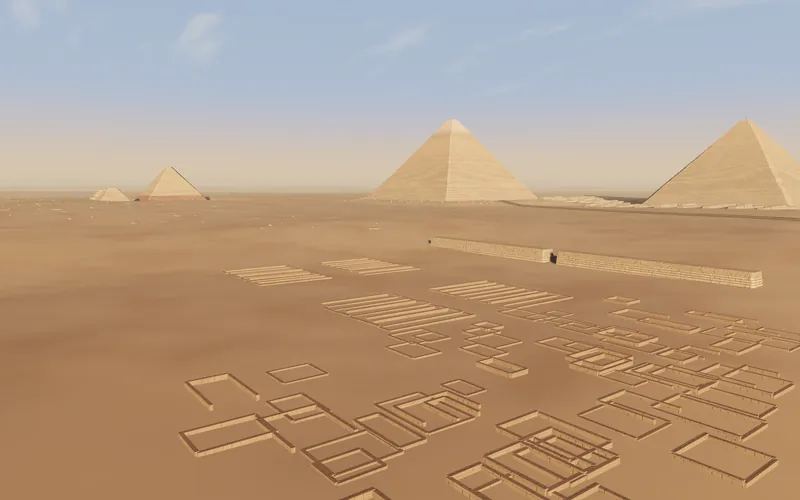
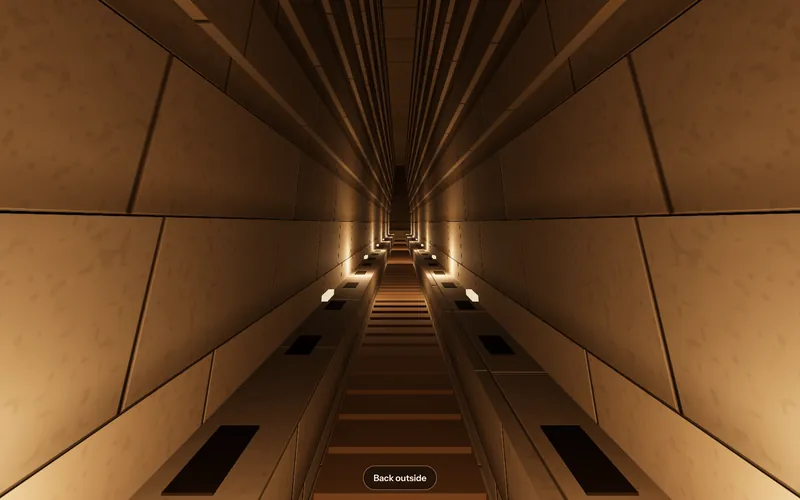
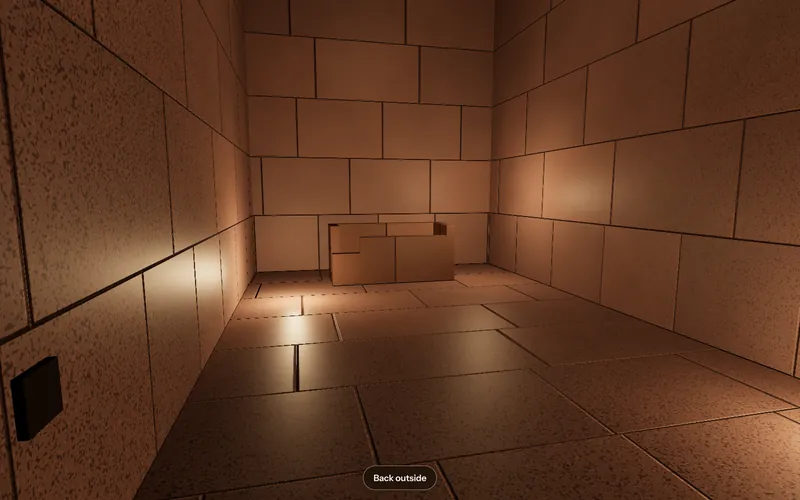
Climb inside the Great Pyramid to the King's Chamber. Drop under the Colosseum's floor into the tunnels where the animals waited. Fly a little plane along the Great Wall, stand among the mortarless walls of Machu Picchu, walk between the stones of Stonehenge. Every place your kid finds opens a true story, and every fact in it is sourced.
Every number on this page is counted from the five wonders themselves, so it changes the day a new one opens.
49places to findEach one a real spot in its wonder, from the King's Chamber to the tunnels under the arena. Tap one and the camera flies there.
4,600years of historyFrom Stonehenge, begun about 5,000 years ago, to the Great Wall, still being built in 1644.
Gizac. 2600 BCE
Colosseum70–80 CE
Great Wall7th c. BCE – 1644 CE
Machu Picchuc. 1420 CE
Stonehengec. 3000–1500 BCE
52jaw-drop numbersEvery place's card leads with one. Three of them:
2.3 millionblocks of stone, in a tomb built about 4,500 years agoGiza
~50,000people could watch, sorted by rank from the sand to the skyColosseum
21,196 kmAll wall branches together, from the 2012 survey.Great Wall
48questions to answerIn Test your learning, with no clock, plus 31 goals to finish on the way.
GizaWho was the Great Pyramid built for?
ColosseumWhich column style is on the ground floor of the outer wall?
Great WallA 2012 survey measured all the branches of the Great Wall together. About how long were they?
Machu PicchuWho most likely built Machu Picchu?
StonehengeWhat was the very first part of Stonehenge to be built, about 5,000 years ago?
18passport stampsThree at every wonder, and three world seals on top.
132sources behind the factsNothing goes in front of a kid without one.
Encyclopaedia Britannica
UNESCO
Smithsonian Magazine
the archaeologists who dug up the pyramid builders' town
Five wonders · 49 places
Walkrightuptothem.
Each wonder is rebuilt in 3D to explore. Every place in it is a real spot with a true story, and these are the views the camera flies to when your kid taps one. Every wonder has its own music, too.
Real gameplay
01
Great Pyramids of Giza
Giza, Egypt · c. 2600 BCE
How did people with copper tools stack over two million stone blocks?
10 places
7 goals
10 questions
01The Great Pyramid2.3 millionblocks of stone, in a tomb built about 4,500 years ago
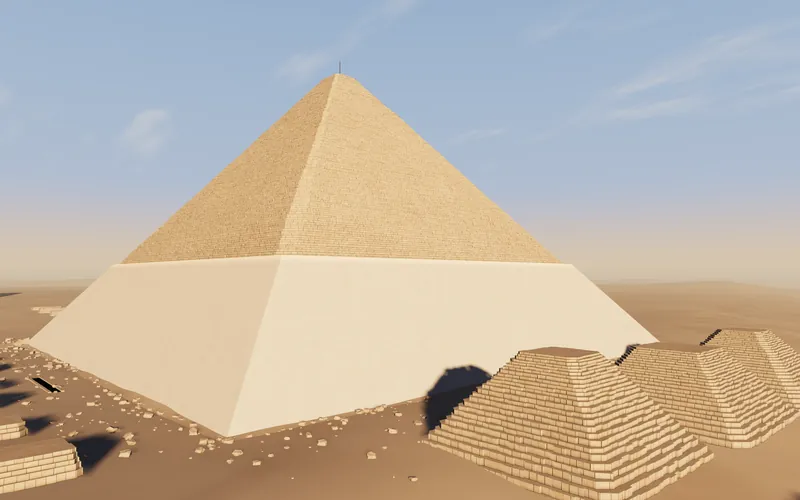
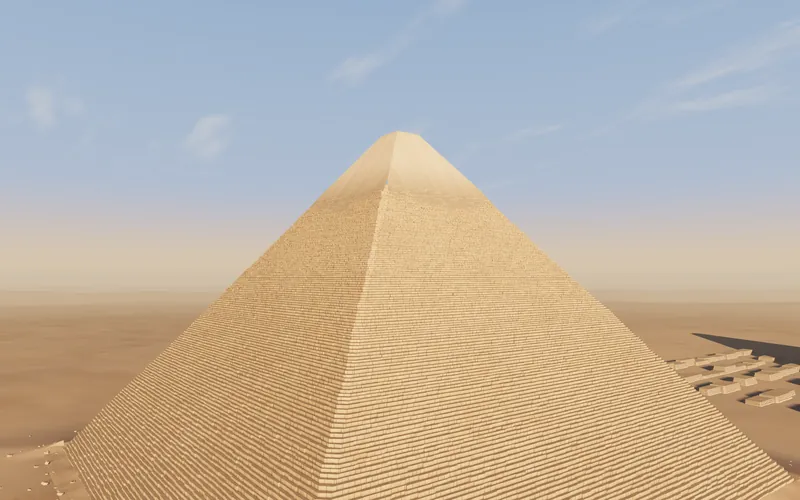
02The Missing ShineOnce smoothall three pyramids were wrapped in white limestone, not stepped
03Khafre's CapAbout 53 degreesKhafre's pyramid is steeper than Khufu's, and still has its white cap
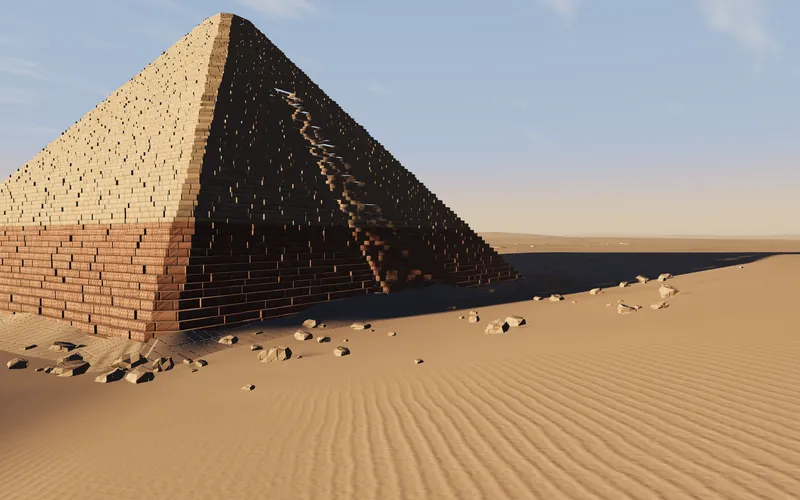
04Menkaure's PyramidAbout 65 mthe smallest of the three, with red granite left unfinished
05The Great Sphinx73 m longcarved mostly from the bedrock, with stone blocks added to the paws and body, and the nose lost long before Napoleon
06The CausewayAbout 494 mthe length of Khafre's funeral road, from valley temple to pyramid
07Khufu's Boat Pit1,224 piecesthe cedar ship, about 43.6 m long, buried beside the pyramid for 4,500 years
08The Builders' TownFed and housedworkers had bread, beer and beef, and tombs near the pyramids they built
09The Grand Gallery46.7 mlong, rising at 26 degrees, with a hidden Big Void above it that nobody has explained
10The King's Chamber9 beamsof granite, some up to 80 tonnes, roof a room deep inside the pyramid
Real gameplay
02
The Colosseum
Rome, Italy · 70–80 CE
How do you get 50,000 Romans in and out in minutes?
10 places
6 goals
10 questions
01The Outer Wall48 mtall: about the height of a 15-storey building
02The Numbered Entrances76numbered public entrances, plus 4 special ones: 80 arches in all
03The Iron Thieves' Holes300 tof iron clamps once held the stone together, about the weight of 50 elephants
04The Missing South Side1349the earthquake that brought down the south side of the outer wall
05The Awning Brackets240masts around the top held up the awning
06The Arena Floor100 daysof games when Emperor Titus opened the Colosseum in AD 80
07The Hypogeum2 levelsof tunnels, cages and machinery under the arena floor
08The Animal Lifts~60capstans one archaeologist counted traces of, under the arena
09The Emperor's Seat~50,000people could watch, sorted by rank from the sand to the sky
10Arch of ConstantineAD 315and it reuses carvings that were already around 200 years old
Real gameplay
03
Great Wall of China
Northern China · 7th c. BCE – 1644 CE
Why build a wall across thousands of miles of mountains?
10 places
6 goals
9 questions
01The Wall Walkabout 5 mTypical width of the walkway on top of a well-built Ming section.
02Battlementsabout 2 mHeight of the enemy-side battlement wall at Simatai, a Ming section.
03Watchtower22 towersIn about 2.25 km of the wall at Mutianyu.
04Beacon TowerSmoke by dayFire by night. Gun shots and flags backed them up.
05Steep StairsRidge to ridgeThe wall follows the crest of the hills, not the valleys.
06Bricks & Rice MortarAmylopectinThe starch in sticky rice that made old lime mortar stronger.
07Drainage Spout1 m +Length of a typical stone drainage trough at Simatai.
08The Wild Wall1,961 kmMing wall counted as lost by a 2012 report, about 22 percent.
09Not One Wall21,196 kmAll wall branches together, from the 2012 survey.
10Seen From Space?NoNot visible to the naked eye from the Moon, and hard to spot from orbit.
Real gameplay
04
Machu Picchu
Cusco Region, Peru · c. 1420 CE
How did the Inca fit stones so tightly that no mortar was needed?
9 places
6 goals
9 questions
01City on the Ridge2,430 mabove sea level, on a ridge between two peaks
02Walls Without Mortar0mortar in the finest walls: the stones just fit
03Temple of the SunJunethe month of the solstice, when the sunrise lines up with the temple's window
04The Intihuatana1of the few carved sacred stones still standing where the Inca left it
05Temple of the Three Windows3trapezoid windows looking toward the sunrise
06The Terraces500+years the drained terraces have held the mountain together
07The Main Plaza~200buildings in the city, around this one open lawn
08Huayna PicchuQuechuathe Inca language still spoken by millions of people in Peru today
09The 1911 Visit1983the year Machu Picchu became a UNESCO World Heritage Site
Real gameplay
05
Stonehenge
Wiltshire, England · c. 3000–1500 BCE
How did Stone Age people move stones from as far away as Wales?
10 places
6 goals
10 questions
01The Ditch and BankAbout 5,000 yearsago people dug the ditch and bank, the first Stonehenge, probably with antler picks
02The Sarsen Circle30 uprightsonce held a ring of lintels, locked in place with woodworking joints
03The TrilithonsAbout 7 mtall above ground, and the biggest stones weigh about 30 tonnes
04The BluestonesAbout 225 kmfrom the Preseli Hills in Wales to Stonehenge, about 140 miles
05Where the Big Stones BeganAbout 25 kmfrom West Woods, where most of the big sarsen stones came from
06The Altar Stone700+ kmfrom north-east Scotland, the longest journey of any Stonehenge stone
07The Heel StoneTwo solsticesthe stones line up with midsummer sunrise and midwinter sunset
08The AvenueAbout 2.8 kmof banks and ditches, linking Stonehenge to the River Avon
09Durrington WallsTens of thousandsof animal bones at Durrington Walls show huge feasts near Stonehenge
10The Landscape1986when Stonehenge, Avebury and nearby sites became a UNESCO World Heritage Site
A button waiting at every wonder
Everywonderkeepsasecret.
Find the right place and a button appears. Tap it and the wonder does something you won't expect: six surprises in all, at least one at every wonder, each one true to what historians know, and each one a story your kid will tell you at dinner. On a phone the panel tucks itself away while one plays, so the secret gets the whole screen. Don't worry, we won't spoil the rest.
Real gameplay
Giza
Find true north with two stars
Night falls 4,500 years ago. Line two stars up on a plumb line, one idea for how the builders got its sides within a few arcminutes of true north.
The buttonFind north
Real gameplay
Colosseum
Opening Day, AD 80
The ruin turns back into a brand-new building and the stands fill. Two gladiators fight a bout that ends the way the one written-down fight of those games did: in a draw.
The buttonAttend the games, AD 80
Real gameplay
Great Wall
Zoom to space
Rise straight up from the wall, past the mountains, toward where the space station flies. It's gone long before you get there.
The buttonZoom to space
Real gameplay
Machu Picchu
Shake the mountain
An earthquake test on two walls: fitted Inca stone with no mortar, and a rough wall of rubble and mortar built for the comparison. One shifts and settles back. The other falls.
The buttonShake the mountain
Real gameplay
Stonehenge
The sky over the stones
Drag the sun along the skyline until midwinter sunset slides down the Great Trilithon. A second button shows the night sky as it was 4,500 years ago, with a different pole star.
The buttonMove the sun
A visit, step by step
Yourkid'sfirsttriptoGiza.
Here is how a visit goes, in the game's real screens. Every wonder works the same way.
1
Arrive.
While the world builds, the archaeologist reads them a true fact about the place: 20 of them at Giza, each one sourced, so even the wait teaches something.
2
Look around.
Tap a glowing marker to fly there. Each one opens a card about that place. Their goals sit beside the world, starting with “Visit all three great pyramids.” Stuck? She gives them a hint. On a phone the panel pulls down to a slim row, so the world gets the room.
Real gameplay
3
Walk, run, fly.
Switch to Walk and it is their own pilot on the sand: run, jump, walk right up to the stone. Switch to Fly and they are in a little plane. Crash it and it crumples like a soda can, boings, and pops back into the sky. There are secret tricks too. We are not saying how.
4
Find out.
Every place they find gets talked through, then opens a card that leads with one big number (at the Great Sphinx: 73 m long) and the story behind it, in plain words. Where historians disagree, the card says so.
5
Test your learning.
10 questions at Giza, one at a time, with no clock, like Who was the Great Pyramid built for? A wrong pick is just marked, and every answer says why.
6
Stamp it.
Explorer: find every point of interest. Historian: complete every objective. Ace: get every question in Test your learning right first time. Each stamp comes down in the passport with its own moment.
The passport
18stamps.Collectthemall.
Every wonder has its own 3 stamps, each in that wonder's ink, and every one lands in your kid's passport and their trophy case. The Passport button on the wonders' home opens it: a book they can page through, with a page for every wonder and the world seals at the back.
ExplorerFind every point of interest.
HistorianComplete every objective.
AceGet every question in Test your learning right first time.
GizaGiza, Egypt
ExplorerHistorianAce
ColosseumRome, Italy
ExplorerHistorianAce
Great WallNorthern China
ExplorerHistorianAce
Machu PicchuCusco Region, Peru
ExplorerHistorianAce
StonehengeWiltshire, England
ExplorerHistorianAce
First WonderEarn all three stamps at one wonder.
GlobetrotterEarn all three stamps at three wonders.
World AceEarn the Ace stamp at every wonder that is open.
What they learn
Storiesworthtellingatdinner.
Each wonder is written around a few things a kid should be able to say by the end. These are the 20 things the 5 wonders are built to teach.
Giza
By the end, they
can say who the three big pyramids were built for, and tell them apart by their size and their stone.
know the pyramids were once covered in smooth white limestone, and where some of it still shines.
can explain how we know the builders were fed, housed and respected workers, not slaves.
can name something nobody has solved yet, like the Big Void hidden inside the Great Pyramid.
Colosseum
By the end, they
can explain how the Romans built a stone stadium for about 50,000 people, nearly 2,000 years ago, with 80 numbered entrances.
can name the three column styles stacked on the outer wall, and say what the stone brackets at the very top once held.
can describe what was under the arena floor: the hypogeum, its cages, and the wooden lifts that raised animals and scenery.
can read the scars on the building: the holes left by medieval iron thieves, and the earthquake of 1349 that brought down the south side.
Great Wall
By the end, they
can explain why the Great Wall is many walls built over about 2,000 years, not one wall, and say how long all of them add up to.
can name the parts of a Ming wall (walkway, battlements, watchtowers, beacon towers, drainage spouts) and what each one did.
can explain how the Ming builders used bricks, stamped marks and sticky rice mortar to build a wall that has lasted centuries.
can sort Great Wall facts from myths, including the space myth and the story of bodies buried inside the wall.
Machu Picchu
By the end, they
can explain who built Machu Picchu, roughly when, and why it sits on a mountain ridge about 2,430 metres up in the Andes.
can describe how Inca stonemasons fitted granite blocks together with no mortar, and what is known (and what is only said) about how their walls stand up to earthquakes.
can explain how the terraces and drains let people farm a steep, rainy mountainside without it washing away.
can tell the true story of 1911: Hiram Bingham did not discover a lost city; local farmers led him to a place they already knew.
Stonehenge
By the end, they
can tell the story of Stonehenge in stages, from a ditch and bank about 5,000 years ago to the giant stones.
know the small bluestones came from Wales and one stone came from Scotland, and I can say how far they travelled.
can explain why the sun lines up with the stones at midsummer and midwinter, and which part is solid fact and which is interpretation.
can name things nobody knows yet, and I know the Druids did not build it.
132sources
Every fact in Wonders is sourced, from Encyclopaedia Britannica, UNESCO, Smithsonian Magazine and the archaeologists who dug up the pyramid builders' town. Dates are the ones historians use, marked “c.” where they are an estimate, and the 3D worlds are reconstructions made for learning, with some details simplified. We have not studied whether Wonders raises history grades, so we do not claim it.
One Pass, every game
“Usually my daughter cries every morning because she doesn’t want to go to school and do math. She played this for 2 hours. I’m honestly blown away.”
Parent of a 2nd grader, on Times Machine, the math game in the same Family Pass
Questionsparentsask.
What is Wonders?
Five wonders of the world your kid can explore in 3D: the Great Pyramids of Giza, the Colosseum, the Great Wall, Machu Picchu and Stonehenge. Each one is rebuilt to walk around, with 49 places to find between them, and every place opens a true story about it.
What does my kid actually do there?
Tap a place and the camera flies there, or walk it as their own pilot, run, jump, or take a little plane up and fly over it. Each place they find opens a card with one big number and the story behind it. There are goals to finish at every wonder, 31 in all, and tapping one flies them to the place it points at. A short quiz called Test your learning has 48 questions across the five, and every wonder has its own music. The archaeologist reads them a true fact while it loads, talks each find through, and gives a hint when they are stuck.
Is there anything hidden?
Yes. Every wonder keeps at least one surprise, six in all, including Find true north with two stars, Opening Day, AD 80, Zoom to space, Shake the mountain and The sky over the stones. A button turns up at the right place, and each one is built on what historians and astronomers know.
Is the history accurate?
Every fact is sourced, 132 sources in all, from Encyclopaedia Britannica, UNESCO and Smithsonian Magazine to the excavation teams' own reports. Dates are the ones historians use, with "c." where they are an estimate, and where historians disagree, the card says so instead of picking the most exciting answer. The 3D worlds are reconstructions made for learning, and some details are simplified.
What are the stamps?
Every wonder has three passport stamps. Explorer: find every point of interest. Historian: complete every objective. Ace: get every question in Test your learning right first time. Three bigger world seals sit on top of them, 18 stamps in all, and every one shows up in your kid's trophy case.
What age is it for?
The cards are written in plain words for curious kids of about 8 to 12, and grown-ups learn plenty too. Nothing needs fast reading: a card stays open until they close it.
Does it work on school Wi-Fi and classroom computers?
It is built to load quickly on school networks and on low-cost classroom laptops, and a small computer gets lighter files.
Can I add more than one kid?
Up to 6 players on one Family Pass, with no charge per kid. Each has their own passport, their own stamps and their own trophy case.
Is that every wonder?
Five are open today. When another one opens, it is part of the same Family Pass, along with every other game in Mastery Arcade.
Will it raise my kid's history grades?
We have not studied that, so we do not claim it. What Wonders does is let a kid stand in a place, find out what happened there, and answer questions about it afterwards.
Wheretofirst?
Five wonders, 49 places, 4,600 years of history and a passport to fill. One Family Pass opens every wonder and every other game in Mastery Arcade.