
Tinkerworks Lab22 experiments
Your kid breaks things to find out why.
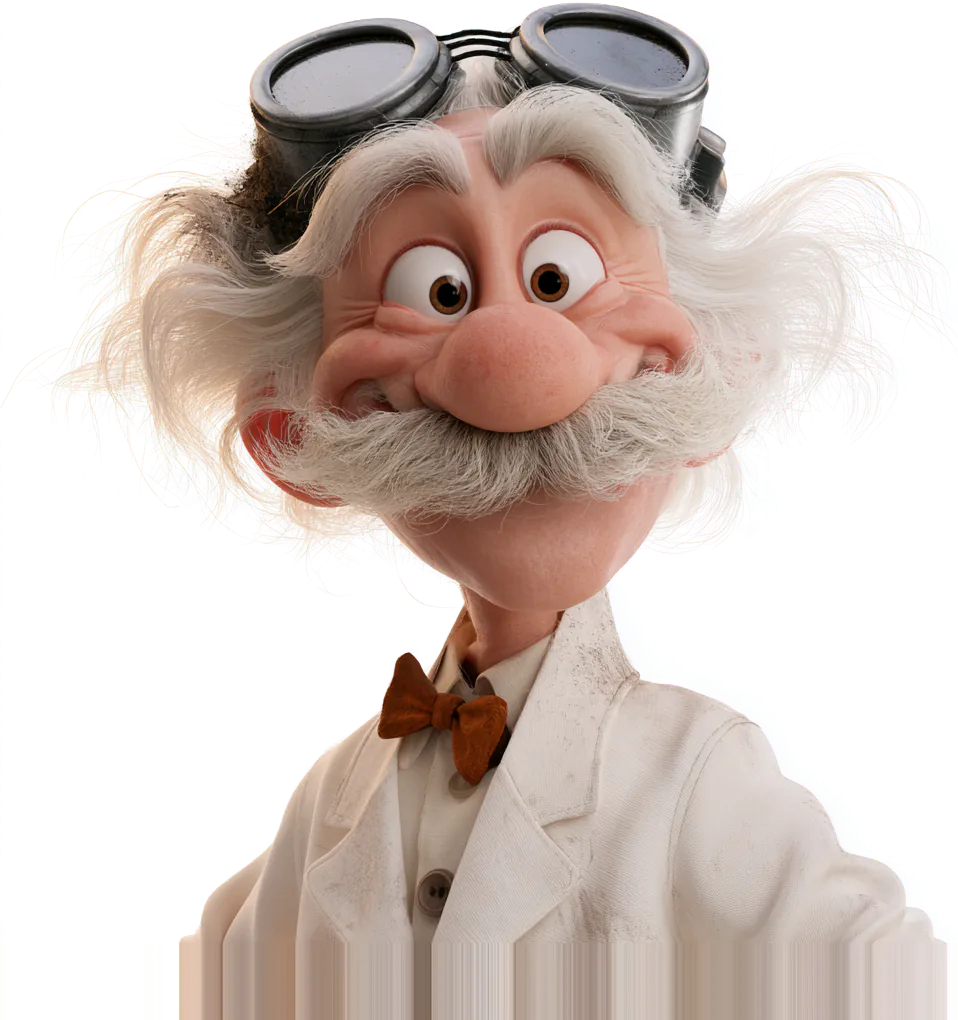
Crash a bus. Stall a wing. Rub a balloon on a cat. Tinkerworks Lab is 22 science experiments your kid can play with, and every time a room opens, Professor Funke tells them one true fact.
Your price stays locked for as long as you're a member. New families pay $59 a year once our next game ships.
Real gameplay from 11 of the 22 rooms
The whole lab, counted
That’s a lot of lab.
- 22
experiments
Each one its own room, with its own question and its own controls.
- 87
ideas to find by doing
Not read about. Found, by changing one thing and watching what happens.
- 276
true facts from Professor Funke
One every time a room opens, every one read aloud by Professor Funke, each checked against a source.
- 66
patches to earn
3 in every room, and 22 of them are secrets.


Every room
Pick a room. Break something.
All 22 rooms are open from the first visit. Every picture here is the real thing, played. Tap a room to look inside.
Free to start. No card needed.
The patches
3 patches in every room. One is a secret.
Each one drawn thread by thread, earned by doing the experiment, and worn on a lab coat with your kid's name on it. Here are the 3 from Static Electricity.
Explorer
Find every idea in the room by doing it.
In Static ElectricitySpot all four ideas: rub the balloon, pull on Pip and lift the confetti, push two balloons apart and puff the cat, then zap the doorknob.
Scientist
Pass Test your learning: questions about what they just saw.
In Static ElectricityTap Test your learning and answer every question about static electricity.
Secret patch
Find the hidden feat. Until they do, all they get is a clue.
Static Electricity's clueHow long a spark can one kid make?
Every patch goes on their coat.
66 patches, 22 rooms, one coat. The secrets stay chalk outlines until they are found, which makes a kid look very hard at an empty spot.
22 secrets. Here is every first clue.
The answers stay in the Lab.
Some pilots push it too far. Someone left notes around the lab: look around.
Smoke TunnelHow many shapes can one plate make?
Sand MusicHow low can an orbit go without touching?
OrbitsCan you freeze the balls in three neat groups? There are notes on the gallery wall: look around.
Pendulum WaveHow long can one magnet get?
Magnet ForgeCan you put a rainbow back together?
Light and Color StudioCan you find a spot where the water stays perfectly still?
Ripple TankHow low can the first hill go and still loop?
Roller CoasterSome elements come in more than one weight.
Build an AtomCan a moving thing stop dead and give all its speed away?
Momentum Crash LabHow many bulbs can one battery pack light at full brightness?
Electricity LabSome drops take the long way home.
Water CycleCan the smallest animal hold up the biggest?
Balance ItCan an egg sink AND float at the same time?
Density PoolCan you pull the cloth so cleanly that even the fish doesn't notice?
Newton's Laws ArenaA thermos keeps hot things hot. What else could it keep?
Heat FlowCan two different angles land in exactly the same spot?
Projectile RangeCan the littlest toy make the biggest shadow?
Shadow TheaterCould just one worker get the stone to the top?
Build a PyramidThe astronomer wrote that water keeps light that strikes it at a glancing blow. What happens to light that strikes it a little more steeply?
Bending LightHow long a spark can one kid make?
Static ElectricityFaraday's notebook lies open on the table. What did he let fall?
Generators
One room, start to finish
From “what if?” to a patch on their coat.
Here is how it goes in the Smoke Tunnel, where the question is “How do planes fly?”

- 1
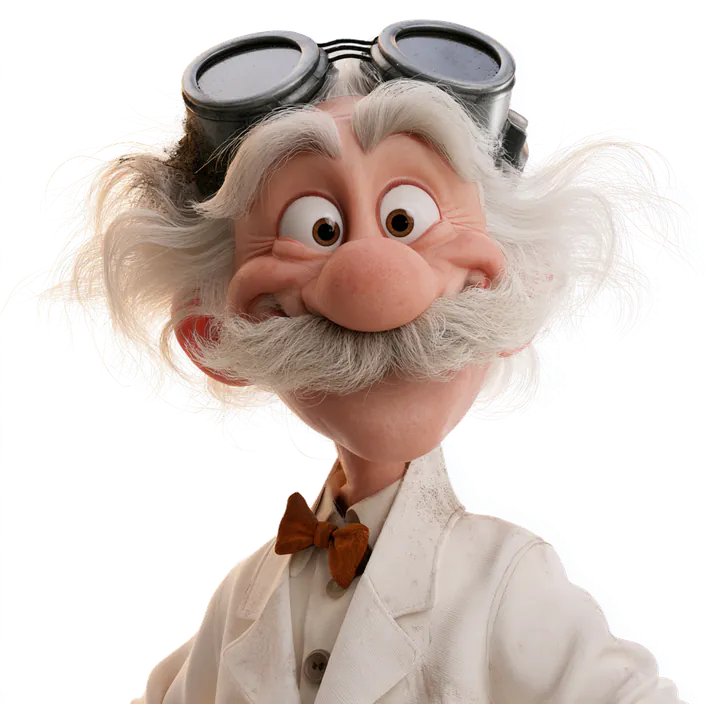
Professor Funke tells them something true.
While the room loads, he reads one of his facts out loud, picked for the room they are walking into. For the Smoke Tunnel, it is about flight.
- 2
They get one thing to try.
Drag Angle of attack to tilt the wing, then watch the smoke behind it.
No instructions page. A short coach points at a real control, and then the room is theirs.
- 3
They find the ideas by doing them.
- Tilt makes lift
- Too much tilt stalls
- Speed makes lift
- Shape makes drag
Each idea has its own nudge, like Try it: set Angle of attack between 4° and 14° and watch the smoke behind the wing. Find all 4 and the Explorer patch is theirs.
Explorer
- 4
Then, questions about what they saw.
Test your learning asks a few questions, and every answer is somewhere in the experiment, so a kid can go back and look. A wrong answer is just marked, and they tap another. Pass it, and that is the Scientist patch.
Scientist
- 5
And then the secret.
Some pilots push it too far. Someone left notes around the lab: look around.
That is the whole clue. Find it, and the third patch goes on the coat.
Secret patch
The science, plainly
Real models. Honest about what they leave out.
What the Lab does
- Every room runs a model of the real thing, so a kid changes one thing and sees what it does. And every room says, on screen, what its model simplifies (all 22 are below).
- Professor Funke's 276 facts are each checked against a published source, and the famous myths are left out. A number is rounded the way its source rounds it.
- Test your learning asks a kid for the answer instead of showing it again. Here is what the research says about that, with its limits:ResearchPractice testing and distributed practice earned high-utility ratings among ten learning techniques. A review across many studies and subjects. Not specific to multiplication.ResearchBeing tested beat re-studying on tests two days and a week later, though not on a test five minutes later. Prose passages in laboratory experiments, not math facts.
What it doesn't do
- It doesn't bring ideas back on a schedule. Times Machine brings a fact back after a gap; the Lab doesn't, so a room is something a kid explores, not something they review.
- It isn't a curriculum. 22 rooms, 87 ideas: a lot of science to play with, not a year of it, and not mapped to any grade's standards.
- Our dataWe haven't studied whether it raises science grades, so we don't claim it does.
Every claim we make, with its source and its strength: our science page.
What every room leaves out
Each room wears its own label, in its own words, so a kid knows when the model is simpler than the world.
- Smoke TunnelSimplified airflow
- Sand MusicIdealized square plate
- OrbitsSimplified: one planet, no air
- Pendulum WaveSimplified: no air, perfect strings
- Magnet ForgeIdealized magnets
- Light and Color StudioSimplified: rays, not waves
- Ripple TankSimplified: idealized shallow water
- Roller CoasterSimplified: one car, no air
- Build an AtomA model, not to scale
- Momentum Crash LabSimplified: no friction or brakes
- Electricity LabSimplified: steady current, ideal wires
- Water CycleSimplified: a tiny world, sped up
- Balance ItToy animals, a weightless plank
- Density PoolReal densities, stylised splashes
- Newton's Laws ArenaSimplified: rigid dishes, ideal ice
- Heat FlowReal materials, sped up 10×
- Projectile RangeSimplified: no spin, no wind
- Shadow TheaterFlat puppets, a flat screen
- Build a PyramidEstimates; pulleys are a what-if
- Bending LightReal Snell's law, thin lenses
- Static ElectricityCharges drawn big; dry winter air
- GeneratorsReal Faraday's law, a model town
“Usually my daughter cries every morning because she doesn’t want to go to school and do math. She played this for 2 hours. I’m honestly blown away.”
Questions parents ask.
What is Tinkerworks Lab?
22 science experiments your kid can play with, each one its own 3D room. Every room asks a question kids already have, like how planes fly or why a balloon sticks to your hair, and hands them the controls. Professor Funke runs the place.
What does my kid actually do in there?
They change one thing and watch what happens: tilt a wing until it stalls, crash a bus into a toy car, shuffle across a rug and zap a doorknob. Each room has a few ideas to find by doing, 87 across the Lab, then a short quiz about what they saw.
What are the patches?
Every room awards 3: Explorer for finding every idea, Scientist for passing the quiz, and a secret one that starts as nothing but a clue. That is 66 patches, 22 of them secret, and every one sews onto your kid's own lab coat.
Can my kid open every room right away?
Yes. All 22 rooms are open from the first visit, so they can start with whatever they are curious about.
Is the science real?
Each room runs a model of the real thing, and each one says on screen what it simplifies (no air, a weightless plank, a model town). Professor Funke's 276 facts were each checked against a published source, and the famous myths are left out.
Does my kid need to read well?
It helps, but Professor Funke reads every one of his facts aloud. The instructions in each room are short, one plain sentence at a time.
Will it raise my kid's science grades?
We have not studied that, so we do not claim it. What the Lab does is let a kid try an idea, see it happen, and answer questions about it. Our science page says what research supports and what it does not.
What does it cost?
Tinkerworks Lab is free to start. The Family Pass opens every experiment without limits, along with every other game in Mastery Arcade, for up to 6 players.

Let them break everything.
22 rooms, 66 patches and a professor with 276 true facts. One Family Pass opens every room and every other game in Mastery Arcade.
Your price stays locked for as long as you're a member. New families pay $59 a year once our next game ships.